Friday, October 31, 2014

Planaria Quick Write

Leslie Gutierrez
31 October 2014


1.  What type of symmetry does the dugesia have?
radial bilateral asymmetry

2. What term is used to describe how a planarian can regrow its body parts?
regeneration fission cephalization

3. Which of the following is associated with the planarian's nervous system?
flame cells diffusion ganglia

4. Asexual reproduction can occur through a process called:
transverse fission binary fission cocoooning

5. A hermaphrodite is an animal that:
can asexually reproduce can regenerate has both male and female parts

6. The dugesia belongs to the phylum:
platyhelminthes planaria turbellaria

7. How could a a person catch a dugesia?
using a net to siphon them from the surface of the water
using a hook and raw liver to attract them

8. An animal that has no internal body cavity to hold organs is called a(n):
turbellarian hermaphrodite acoelomate

9. How does the dugesia obtain oxygen?
diffusion through gills with its flame cells

10. The dugesia will tend to stay in what areas?
dark light warm


Reference : http://www.hhmi.org/biointeractive/classroom-activities-planaria-regeneration-activity


Sunday, October 26, 2014

Glycolysis

Leslie Gutierrez
Mrs. Malonek
Biology 1/2
26 October 2014
Glycolysis

Glycolysis is the most fundamental stage of cellular respiration because it is the first step in cellular respiration, regardless of the type it is all cells are able to do cellular respiration and carry out Glycolysis. Note that Glycolysis itself is anaerobic, in that oxygen is not required, because it is billions of years old and evolved in ancient days. This was before O2 accumulated in the seas. The overall main  point of cellular respiration is to harvest electrons from organic compounds such as glucose and use that energy to make a molecule called ATP. Glycolysis is the only step in cellular respiration that requires ATP to make ATP. This process happens in the cytoplasm because it doesn't need organelles. In Glycolysis of two ATPS to the glucose that we started with the product is cleaved into two G3Ps. From this the cells than harvests NADH and ATPs. The anaerobic pathway is respiration’s first phase according to Glycolysis video music rap by science music videos.


Reference: 

http://staff.jccc.net/pdecell/cellresp/respintro.html


Wednesday, October 8, 2014

Should GMO's be allowed?

Leslie Gutierrez
Ms. Malonek
Biology
8 September 2014

Should GMO's be allowed?
GMO's should not be allowed. According  to the Documentary 2013 Genetically Modified Foods by Anna Kopecky, 88% of the corn in the United States is genetically modified. According to Jeffery in the video, this has causes massive damage and unpredicted side effects. In addition, since GMO does not exist anywhere in nature, instead of helping us, it is destroying us and causing more problems. GMO also causes a numerous amount of digestive orders such as problems with the heart, kidney, and produces many diseases. In addition to this, it causes many problems in the liver and spine according to Nick Basso, one of the professors in the video. Plus, the BT used to GMO causes many problems, although the FDA has claimed it to be "harmless." Although it kills insects, it causes corn to have a toxic problem. BT kills human kidney cells and stay in our intestine. For example, Canada has a similar case, where mother were giving birth to babies with disorders due to drinking milk with BT. In addition, it also creates allergies in ones body. In the video, there was this one case where this mother was feeding her child raw corn with had BT and causes her son to become allergic to corn.  She change her son diet to vegetables that were not GMO, and he showed process of improvement. Although Roundup makes it easier for farmers to kill insects, it is does not cause an benefit what so ever. If animals eat GMO, it kills their nucleus and causes them to become weak and sick, since Roundup causes nutrients in a living organism body to hug together and not function properly. 
GMO also created the birth of a mystery organism that scientists have not still not identified . GMO has also created problems in cats and dogs. "The longer we feed them, the more will die."
GMOs are especially dangerous to children, since they cannot process it. This was found in a Documentary 2013 Genetically Modified Foods. 

Source: http://www.nongmoproject.org/learn-more/


Friday, October 3, 2014

How has DNA fingerprinting Changed Forensics?

Leslie Gutierrez
Ms. Malonek
Biology 1/2
2 October 2014

How has DNA fingerprinting Changed Forensics?

To begin with, DNA stands for Deoxyribonucleic acid,  a molecule that encodes the genetic instructions used in the development and functioning of all known living organisms and many viruses.  It is the carrier of genetic information and present in nearly all living organisms as the main 
constituent of chromosomes. Before DNA fingerprint was discovered, the crime department all around the world had little forensics, or scientific methods that really helped investigators solve crime scenes. Before, the person who was guilty of a crime left no evidence, making it hard for police to find that person and put him in jail. However when DNA fingering was discovered by James Watson and Francis Crick in in the 1950s, the criminology industry and forensics was changed forever. By extracting  a DNA fingerprint found in a crime scene, investigator were able to find the person who committed a crime. In addition to this, if investigators found one or more suspects in a crime, they were able to find the person who was guilty of the crime by using DNA fingerprinting. With DNA fingerprinting, crime investigators could find valuable information easier and  that was more resourceful. No one could prove a DNA fingerprinting not there. 

Reference: 

http://blog.wellcome.ac.uk/2011/09/06/before-dna-20th-century-forensics/


What are the three advantages of PCR?

Leslie Gutierrez
Ms.Malonek
Biology 1/2
2 October 2014

What are the three advantages of PCR?

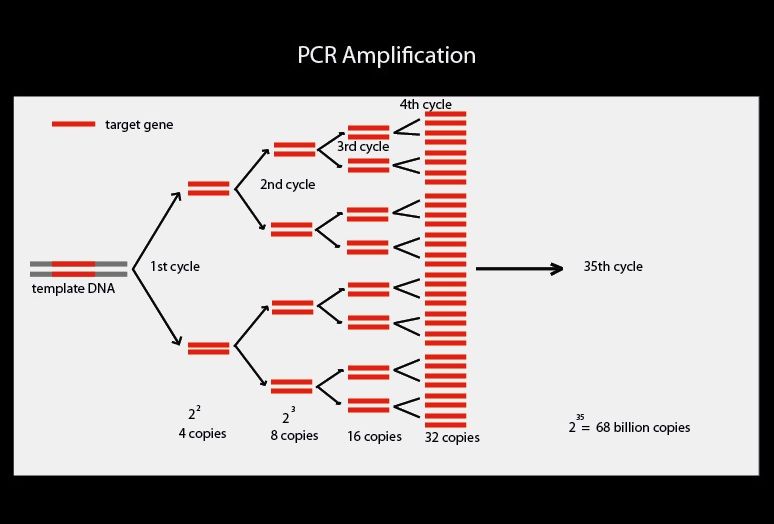
PCR is a method of cloning alleles, making millions of replicas from trace quantizes or fragment DNA.

1. PCR can amplify STR in any amount needed to successful profiled, so very small samples or degraded samples are less of a problem.

2. STR profiling can be completed in a fraction of the time required for the VNTR.

3. It is not necessary to work with any radioactive labeled probes or X-ray film.


Reference: 
Crime Scene by  Larry Ragle 

Friday, September 19, 2014

Molecules

Leslie Gutierrez
Mrs. Malonek
Biology 1/2
17 September 2014
Molecules
Describe the shapes of molecules and how that is the foundation of biology.

Molecules are made up of one or two of the same or different atoms. Molecules can have different shapes from a straight to a curve shape, but it all depends on the atoms it contains. The shape of the molecule depends on repulsion between electron pairs. Molecules combine to form compounds, where they lose all their individual properties and are given new ones. The different type of molecules in a compound are demonstrated in the formulas. Molecules are the foundation of biology because they are are fundamental structure of cells which is needed in living things. Cells that help our living body to function and give us the ability to do the things we  are able to do today. Biology is study of living things in the world


Reference: 

  • http://www.chem.ufl.edu/~myers/chm2045/shapes.htm

Molecule
Frozen Water Molecule

Saturday, September 6, 2014

Enzymes

Leslie Gutierrez
Ms. Malonek
3 September 2014
Biology
Enzymes in Our Bodies
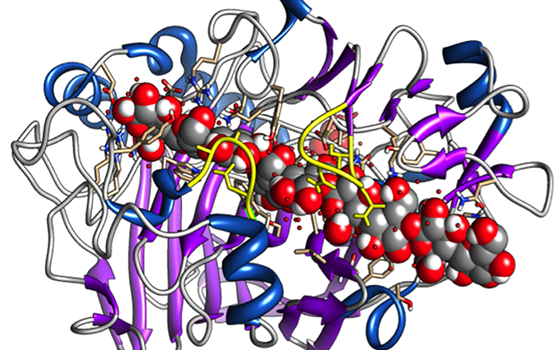
Enzymes are protein molecules which are catalysts, substances that speed up the process of a chemical reaction. Enzymes can be found in our bodies ad help us live, function, and work. Three are three types of enzymes that help living things maintain themselves : Metabolic Enzymes, Digestive Enzymes, and Food Enzymes. Digestive enzymes in our living bodies help break down food and turn it into proteins. Digestive Enzymes, in addition to this, help break down fats, carbohydrates and proteins in our body efficiently.  

There are 4 types of digestive enzymes in the human body: 


-Amylase
This enzyme is essential with helping us with the with the digestion of our carbohydrates. In addition to this it is an aid in diagnosing various pancreas or other digestive tract diseases.

-Lactose
This enzymes helps our body break down sugars , lactose, and anything with dairy products. This is enzyme helps  and is especially important to people who are lactose and tolerant.

-Lipase
This enzymes helps our body break down the fats that we consume each and everyday. It is produce in small amounts in our mouths and stomachs, and in larger amounts our pancreas

-Proteases
Proteases mare enzymes that help break down proteins in the human body.
They can be found:
  • Chymotrypsin
  • Pepsin
  • Trypsin


Websites:
1. http://ibs.about.com/od/ibsglossaryae/g/Digestive-Enzymes.htm
2.  http://science.howstuffworks.com/life/cellular-microscopic/cell2.htm